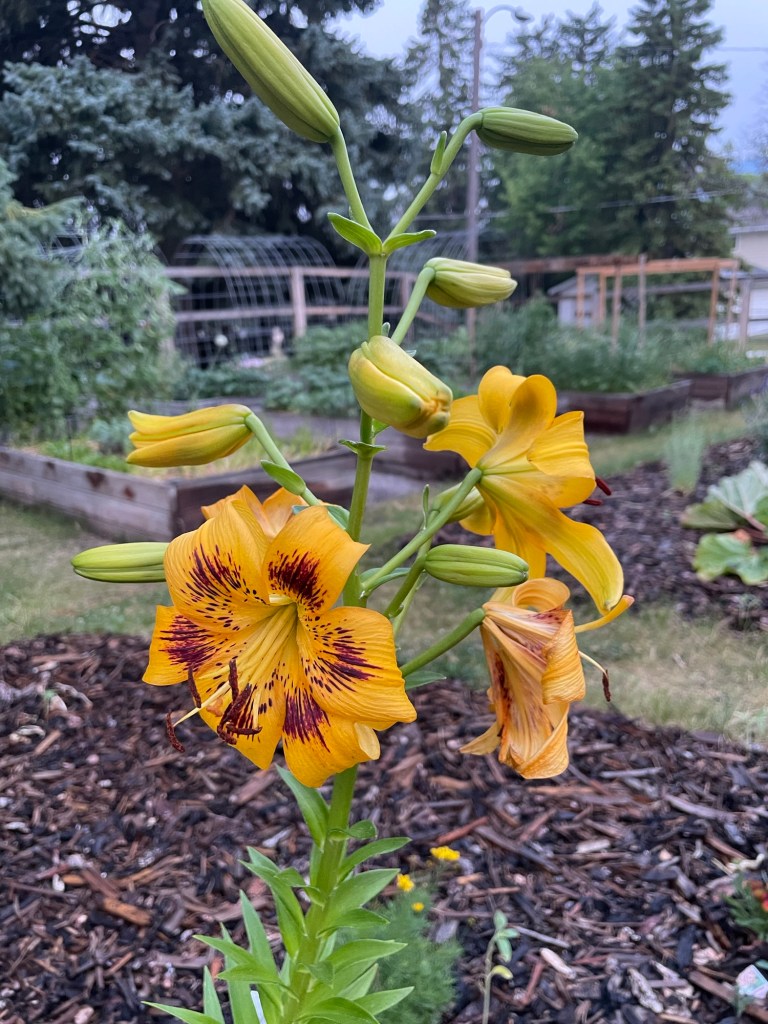
There are some days where you can feel the turn of the earth and know exactly where you are in time. The still fullness of life suddenly all around you. Now.
Just a moment ago the leaves were small, the stalks short, the flowers buds, everything only promise and then – out of nowhere – the riot of the summer.
I am deeply seasonal.
But in each season there are sub-seasons. Inner dimensions, textures of the larger concept. Some spring days, even those past where you might bring along a coat, it may snow. And you will be surprised. I thought this was over and done. Some spring days it rains, which is welcome, but the wind may bite and the petals may fall and the young sprouts may strangle under puddles filling with worms.
The poets did not write to help themselves process their great joys and triumphs. Sure, they wrote odes, and some pastorals too. And there are epics and ballads – not every poet need care about the inner life of limerance or ennui. Sometimes it was just about the meter.
But for me, poetry is a place to go with the unknowable darkness. The strident and plaintive lament into an indifferent universe. The trees that don’t bear fruit, the river swelling over its banks, the broken robin’s egg on the sidewalk.
Where then do I go with this jar of fireflies, these forearm rivulets of peach juice, these bee-humming wildflower meadows? Where can I take my days catching frogs in the pond, or sun-dappled hikes with my beloved, or squealing children splashing in the creek? Joy is overwhelming too.
I’m in the high summer of my life.
Yes, the sun is sometimes overbearing and the labors are many. I sow and water and weed. Weed, water and sow. Some [though not myself] may call it toil, and that would be a poem we might expect. Poets, after all, know just what to do with suffering. But what can they teach me about coping with happiness?

The autistic urge to over explain…
This isn’t where I explain the poem. I wouldn’t say I am an either a great poet or a great student of poetry. My writing is sometimes poetry-adjacent. Like, there are days where the right thing to do is to compare thee to a summer’s day, and I’m not about to apologize for it on my own damn blog. I might even put more poems on here, who knows.
This is instead where I explain the vast cogitations that are behind the idea of happiness. Being happy is not something that I ever expected about my life and so I didn’t rehearse for it at all. And, for myriad neurocomplex reasons, rehearsal is a huge part of my psychological safety.
People say vague shit all the time and they think that it conveys information. As an example, when I was at that age where I asked my parents thoughtful questions about my own future [let’s say from like 10-15], I’d be like, “hey, mom, what sort of adult do you want me to be? What should I do when I grow up?” They would answer, “well, I just want you to be happy.”
It is possible that other people do not have these sorts of conversations with their parents. I recognize now that I asked things like this because I was trying to figure out how best to please them since I wasn’t sure what my life was actually for and I didn’t know what I wanted from it. I can imagine people who don’t feel the need to think about this sort of thing at the age of like 11, because they know that their life is for – say – getting a job and getting married and having kids and buying a boat. Or they know that the delivered life script is bullshit for them because they aren’t cisgendered or straight or they don’t want kids or to participate in wage slavery. But I was not the sort of person who knew those truths about myself [or would have known how to honor them if I did]. And so I figured, if I didn’t know what my life was for maybe some adult person who had some experience and knew me pretty well might have a decent idea.
In the absence of really strong feelings about one’s own life trajectory, I wouldn’t say that my approach was the wrong one. But I do know that the thing that my parents wanted for me [to be “happy”] was only conceptual to either of them. They no more knew what “happy” as a state of being was than they could have explained to me how to accomplish it. And so their suggestion that I be happy [and that in being happy they would be pleased with me] felt as heavy as if I had needed to be doctor or a rabbi to properly please them. They didn’t mean it that way. They thought they were freeing me from their expectations to “make something” of myself and that this made them good parents. Turns out you can do the opposite thing that your parents did to you and still be mediocre at parenting…
But, because of that good ole autistic literal thinking, I set out on a lifelong journey to figure out how to be happy. This is “simple,” which is to say that the effort expended is no more than what most people expend to be unhappy. What makes the difference is what you spend your energy on, not how hard you try. Happiness is not guaranteed with that effort expended, you also have to have your basic needs met and have opportunity, but it is shockingly simple in a wide variety of class and life situations. Happiness is much less about what you have or what happens to you and much more about how you think about what you have and what happens to you. It is mostly mindset [she says after studying all of the published scholarship on happiness and actively participating in two decades of therapy and rigorously self-monitoring her internal monologue].
So I guess I managed the thing my parents wanted for me and now it is one of my life’s great ironies that they [mostly my mother] are perpetually displeased with me and my life choices [but that is a tale for another day]. I’m sure that there are plenty of kids who go on to be a doctor like their parents wanted and then their parents are like, “what, you think you’re better than me now?” It’s the same thing. Dude, I just did what you wanted.
The truth about life is that most people in it are not happy. I suspect that most of them don’t really believe in happiness in the same way that I don’t believe in eternal salvation. And sometimes it feels oddly lonely to be out here evangelizing about a better way to live. Like, ya’ll this is gospel: they did studies on monks! And people are like no, no, no, the only way to live life properly is to be rich and consume things and hate people that don’t look like you and look young and beautiful forever. I have heard the good news and I want to share it! And like I’m a Mormon or a Jehovah’s Witness, people are out there slamming the door in my face. I understand this, I don’t want what the Mormons and Jehovah’s Witnesses are selling either and I can see how evangelism is non consensual and nasty.
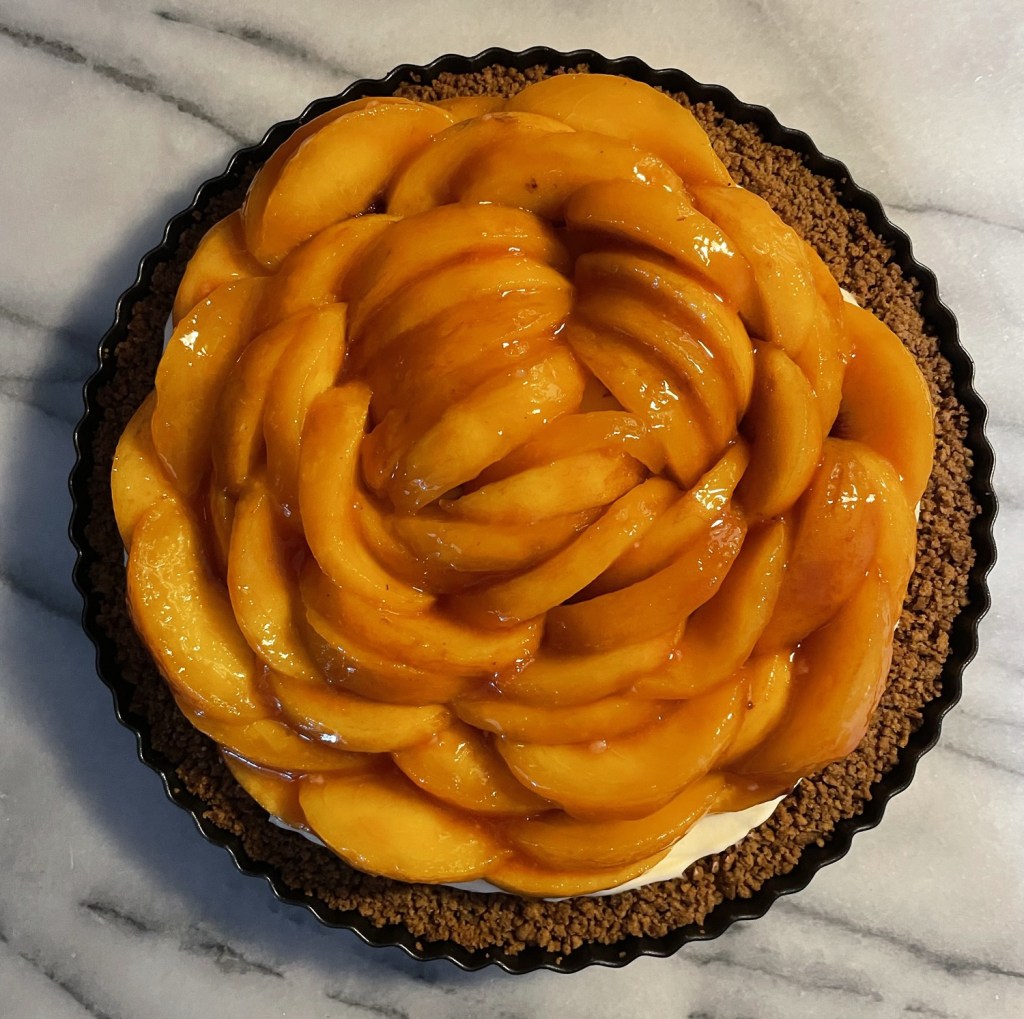
So, like, only bother being happy if you really want to. You are free to be miserable, all the cool kids are doing it. But omg, ya’ll, the entire universe is in a summer-ripened peach! People write poems about this shit, it’s true.
 The Oracle of Z